Unoccupied homes in England: Our 2026 study


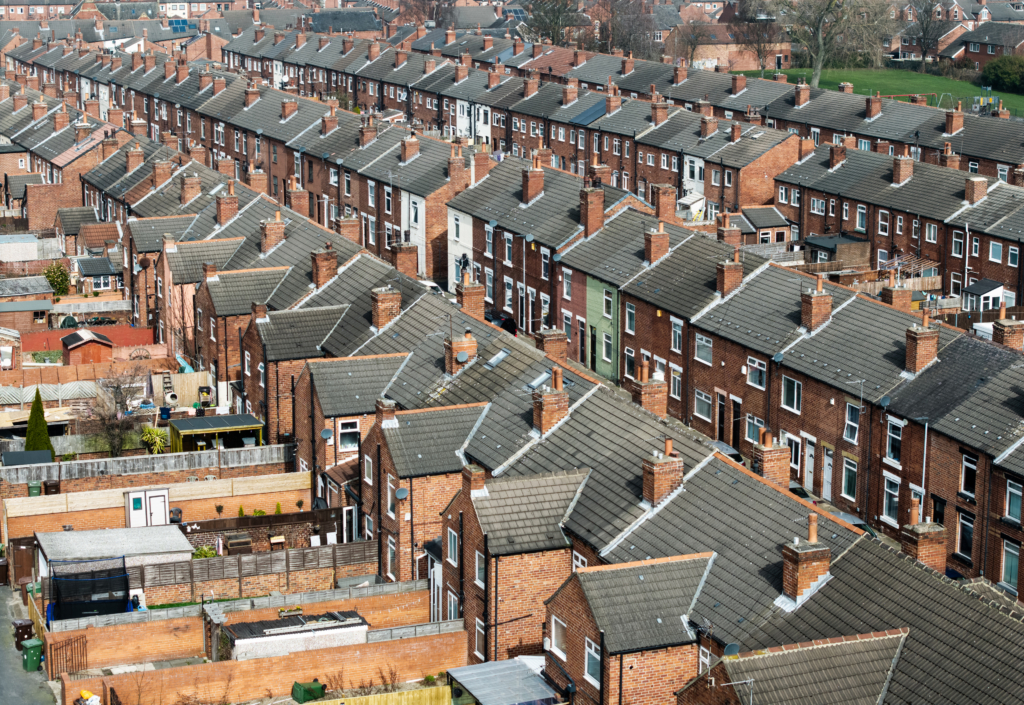
According to the latest 2025 data, there are presently 754,000 vacant properties in England, which is approximately 2.9% of all English homes. But, with a growing population, why are so many homes remaining unoccupied?
In some parts of the country property-owners are even turning to ‘property guardians’- individuals willing to live in unoccupied buildings that fall below the usual standards of rented accommodation, often with short-term but affordable contracts. Over the last 12 months in the UK, there have been an average of 3,600 monthly searches for ‘property guardianship’ on Google, up 24% vs 2022.
Studying government figures and our own Homeprotect data, we investigated property trends across England to identify the areas with the highest/lowest volume of vacant dwellings and how things have changed over the last ten years.
We have updated this article, originally published in 2018, with the latest available data from October 2025. Read on to learn more.
Where are the most total unoccupied properties located?
ross England to identify the areas with the highest/lowest volume of vacant dwellings and how things have changed over the last ten years.
We have updated this article, originally published in 2018, with the latest available data from October 2025. Read on to learn more.
Where are the most total unoccupied properties located?
| Area | No. of unoccupied properties | Total dwellings | % of total unoccupied | |
| 1 | Greater London | 105,138 | 3,822,000 | 2.8% |
| 2 | Birmingh-am | 14,473 | 457,000 | 3.2% |
| 3 | Leeds | 11,767 | 368,000 | 3.2% |
| 4 | Liverpool | 10,674 | 233,000 | 4.6% |
| 5 | Bradford | 7,550 | 224,000 | 3.4% |
| 6 | Sheffield | 7,423 | 252,000 | 2.9% |
| 7 | Brighton and Hove | 5,727 | 134,000 | 4.3% |
| 8 | Manchest-er | 5,684 | 241,000 | 2.4% |
| 9 | Bristol, City of | 5,655 | 208,000 | 2.7% |
| 10 | Leicester | 5,093 | 138,000 | 3.7% |
Top 10 areas with the total highest number of unoccupied properties (2025)
Despite high costs and high demands for property in the capital, it’s unsurprising that London tops the list for the overall total amount of unoccupied properties. At 2.8%, the proportion of London property that is unoccupied is just below the average of England (2.9%).
Outside of London there’s larger-than-average unoccupied rates in other big cities such as Birmingham, Leeds, and Liverpool.
It’s interesting to note that unoccupied property exists all over England, and cities around the country are experiencing a similar trend. Brighton and Bristol in the south also rival other northern cities that make our top 10 list including Manchester and Sheffield.
We can also look at the areas with the least number of total vacant dwellings. Predictably these tend to be areas with smaller populations to begin with, though there are some interesting stories to be found here:
Where are the least total unoccupied properties located?
| Area | No. of unoccupied properties | Total dwellings | % of total unoccupied | |
| 1 | Isles of Scilly | 63 | 1,000 | 6.3% |
| 2 | Corby | 165 | 31,000 | 0.5% |
| 3 | City of London | 202 | 8,000 | 2.5% |
| 4 | Daventry | 451 | 38,000 | 1.2% |
| 5 | Purbeck | 530 | 23,000 | 2.3% |
| 6 | Melton | 557 | 25,000 | 2.2% |
| 7 | West Somerset | 561 | 19,000 | 3% |
| 8 | Oswestry | 570 | 18,000 | 3.2% |
| 9 | Christchu-rch | 577 | 24,000 | 2.4% |
| 10 | Tandridge | 603 | 38,000 | 1.6% |
Top 10 areas with the total lowest number of unoccupied properties (2025)
Despite topping our table for the least unoccupied homes at only 63 recorded, it’s perhaps understandable that a remote place like the Isles of Scilly would have such a high proportion of its homes unoccupied. The appeal of using property for holiday homes will also play a role here.
It is more surprising that the City of London, perhaps some of the most sought-after property in the country, has such a high proportion of it unoccupied. It’s likely that speculative investment and landlords looking to hold onto their assets here plays a big role in how property here is treated.
Daventry and Tandridge stand out as places with significant populations but comparably below-average unoccupied rates.
We can also focus in on areas that have proportionally the biggest rate of unoccupied properties, when comparing this to the total amount number of dwellings in each area.
Where are the most unoccupied properties, as a proportion of the area
| Area | No. of unoccupied properties | Total dwellings | % of total unoccupied | |
| 1 | Teesdale | 778 | 12,000 | 6.5% |
| 2 | Isles of Scilly | 63 | 1,000 | 6.3% |
| 3 | Wear Valley | 1,842 | 31,000 | 5.9% |
| 4 | Durham | 2,279 | 39,000 | 5.8% |
| 5 | St. Helens | 2,841 | 50,000 | 5.7% |
| 6 | Derwents-ide | 2,206 | 41,000 | 5.4% |
| 7 | Wansbeck | 1,438 | 29,000 | 5.0% |
| 8 | Alnwick | 790 | 16,000 | 4.9% |
| 9 | Castle Morpeth | 1,085 | 22,000 | 4.9% |
| 10 | Middlesb-rough | 3,254 | 66,000 | 4.9% |
Top 10 areas with the highest proportion of unoccupied properties (2025)
When comparing in this way, Teesdale has the highest proportion of unoccupied properties, at 6.5%.
The Isles of Scilly also rank highly because 63 unoccupied properties are still 6.3% of the 1k total dwellings there.
Middlesbrough and St. Helens stand out as larger towns with still high rates of unoccupied property.
Where are the least unoccupied properties, as a proportion of the area?
On the opposite side of the spectrum, we can explore areas of England where there’s relatively minimal unoccupied homes, as a proportion of the overall stock:
| Area | No. of unoccupied properties | Total dwellings | % of total unoccupied | |
| 1 | Corby | 165 | 31,000 | 0.5% |
| 2 | Daventry | 451 | 38,000 | 1.2% |
| 3 | Hart | 670 | 43,000 | 1.6% |
| 4 | Hammersmith and Fulham | 1,538 | 98,000 | 1.6% |
| 5 | Havant | 896 | 57,000 | 1.6% |
| 6 | Tandridge | 603 | 38,000 | 1.6% |
| 7 | St Edmundsbury | 1,054 | 63,000 | 1.7% |
| 8 | Solihull | 1,626 | 96,000 | 1.7% |
| 9 | Wandsworth | 2,661 | 157,000 | 1.7% |
| 10 | Bexley | 1,797 | 101,000 | 1.8% |
Top 10 areas with the lowest proportion of unoccupied properties (2025)
Corby here is crowned the town where you’re least likely to find an unoccupied property- an outlier from the rest of the pack with only 0.5% of homes reportedly unoccupied at the last count.
Why are so many properties sitting empty?
There are various reasons why a home may be vacant, including that they’re up for sale, in probate, under renovation, are occupied solely during the week or at the weekend, have been bought as an investment or have simply been abandoned.
A growing trend or on the decline?
According to our analysis of Government data, across England as a whole the number of unoccupied homes increased by 26% when comparing 2015 and 2025 data.
This is an increase of 154,085 unoccupied homes in the last 10 years, from 600,179 in 2015 to 754,264 in 2025.
Top 10 areas with the highest rise in number of unoccupied properties between 2015-2025
| Area | 2015 unoccupied properties | 2025 unoccupied properties | % Change | |
| 1 | Isles of Scilly | 8 | 63 | 688% |
| 2 | Milton Keynes | 863 | 3,666 | 325% |
| 3 | Hounslow | 1,095 | 4,310 | 294% |
| 4 | York | 844 | 3,149 | 273% |
| 5 | Harrow | 825 | 2,907 | 252% |
| 6 | Brent | 1,073 | 3,639 | 239% |
| 7 | Westmin-ster | 1,255 | 3,724 | 197% |
| 8 | Redbridge | 1,293 | 3,320 | 157% |
| 9 | Waltham Forest | 1,143 | 2,874 | 151% |
| 10 | Welwyn Hatfield | 642 | 1,587 | 147% |
At the top of our chart is again the Isles of Scilly, though this perhaps isn’t a fair comparison when we consider the population of the area (1k dwellings). Still, a 688% increase from 8 to 63 is likely to have had quite an impact on the area.
Milton Keynes, Hounslow, and York are our next areas which have increased the most.
The number of unoccupied homes in Milton Keynes appears to have increased every year from 2015 to 2025, rising from 863 to 3,666.
Hounslow had relatively low unoccupied homes before the Covid-19 pandemic, but since 2020 this has increased substantially. In 2018 the area only recorded 757 unoccupied homes; this figure now sits at 4,310 for 2025.
York’s unoccupied rate also appears to correlate with the Covid-19 pandemic, increasing more drastically each year since 2020. In 2025 alone the city increased its unoccupied homes by 499, up from 2,650 in 2024 to 3,149 a year later.
Top 10 areas with the largest drop in number of unoccupied properties between 2015-2025
Not everywhere in England is increasing its unoccupied property stock, however. Our research uncovers the areas which have seen the highest growth in ‘re-occupation’:
| Area | 2015 unoccupied properties | 2025 unoccupied properties | % Change | |
| 1 | Hyndburn | 1,962 | 1,187 | -40% |
| 2 | Wyre | 1,548 | 1,068 | -31% |
| 3 | Copeland | 1,479 | 1,035 | -30% |
| 4 | Burnley | 2,456 | 1,758 | -28% |
| 5 | Pendle | 2,045 | 1,516 | -26% |
| 6 | Tandridge | 772 | 603 | -22% |
| 7 | Islington | 2,981 | 2,345 | -21% |
| 8 | Blackburn with Darwen | 3,002 | 2,398 | -20% |
| 9 | Craven | 1,007 | 811 | -19% |
| 10 | Bradford | 9,277 | 7,550 | -19% |
The Hyndburn area has seen the most success in getting homes back in use, with a 40% reduction in unoccupied homes reported, up from 1,962 to now just 1,187.
Wyre, Copeland, and Burnley have also seen similar success with around 30% improvements between them.
It’s interesting to shed some light on not just where the most unoccupied properties are located across England, but consider why there are so many vacant dwellings across the nation.
The changing nature of the letting market is likely to be one of the key contributors to the number of vacant homes.
More and more properties may be used as short term rentals or Airbnbs – especially in popular ‘weekend break’ locations such as Birmingham and Liverpool – meaning they will often sit empty in between bookings or are simply not registered as occupied homes.
Similarly, many may be used as part-time or holiday homes by their owners.
Vacant properties can be more susceptible to fire and other hazards, so if you’re leaving a property unoccupied for longer than 30 consecutive days you may need to consider specialist unoccupied property insurance.
Please note: This article does not contain investment or tax advice
We compared the latest amount of ‘all vacant dwellings’ from Live Table 615: Vacant Dwellings by Local Authority District with Table 125: Dwelling Stock Estimates by Local Authority District (rounded figures). When 2025 data in either dataset was not available, we used the previous year when data was available.
Recommended by our customers
74% Saved money when they switched to Homeprotect*
*Survey data of 1,281 buying customers from 4th November to 2nd December 2025