

Accidental damage Risk guide


Accidents at home are often sudden, unintentional and can be surprisingly costly. This guide focuses on practical ways to prevent common mishaps, what to do when they happen, and how to work with others to put things right. It’s general information for UK households and not product advice. Where helpful, we link to trusted external sources for more detailed information.
How to prevent accidental damage
Simple changes can help prevent accidental damage in the home:
- Keep liquids away from electronic devices and use drinks coasters. Always store laptops and other valuable electronic devices somewhere safe while not in use.
- Keep cables tidy to reduce trip hazards.
- For furniture, fit felt pads under large items. Add corner guards on sharp edges. Lay non-slip mats underneath rugs.
- A lot of accidental damage claims are a result of DIY mishaps.
- You can protect your floors and carpets by laying down sheets or plastic when painting.
- Any projects involving electrics or plumbing should always be done by a professional.
- TVs, especially large flat screens, can be knocked over easily. If you can, attach it to the wall.
- Protect your mobile phone with a hardwearing case and a screen protector to avoid costly damage.
The Royal Society for the Prevention of Accidents (RoSPA) offers practical guidance for home safety tips.
Accidental Damage prevention – room-by-room
Every room has its unique risks:
- In kitchens, protect worktops by using chopping boards, line the cupboard under the sink, and place mats under appliances that vibrate.
- In bathrooms, avoid over‑tightening fixings on brittle tiles, refresh sealant as needed, and use non‑slip mats to reduce the risk of falls.
- Living spaces benefit from TV anchoring, cable tidies, and designated “drink zones” away from electronics.
- Hallways and stairs should be well lit and free of clutter. The NHS has clear advice on preventing falls in the home.
- In bedrooms, handle mirrors with care and use anti‑tip kits on tall furniture.
Accidental Damage definitions
When discussing your claim, distinguish as best you can between “drips”, “leaks” and “spills”. Clarify if damage is cosmetic or structural. Before a flood
“Accidental damage” is sudden and unforeseen, whereas wear and tear develops gradually, and defects arise from design or workmanship.
“Scorching” and “singeing” don’t always meet the definition of “fire” and may be treated differently.
How your circumstances affect accidental damage cover
Tenants, landlords, and shared responsibility
Clear expectations set out between landlords and tenants reduces the risk of disputes arising in the event of accidental damage occurring. Landlords should provide a detailed inventory with photos at check‑in and check‑out to help distinguish fair wear and tear from accidental damage. If you’re a tenant, report issues promptly to avoid disputes at the end of your tenancy.
Short‑let and hosting
If you are hosting guests (e.g. running an Airbnb), provide your guests with guidance on how to use appliances and a clear way to report incidents. You may even want to provide a small cleaning kit for guests to use. Record the condition of the property between tenants with time-stamped photos.
Working from home and hobby rooms
In home offices:
- Route and clip cables so they can’t snag or become a trip hazard.
- If you can, keep drinks on a separate surface to your electronic devices.
- Use a surge‑protected extension lead.
Depending on your hobbies, certain areas may need floor protection, safe storage for any chemicals, clear labelling, and good ventilation. For musical or video equipment, use sturdy stands, manage cables neatly, and use protective cases when storing or moving items within the home.
High‑risk activities at home
DIY, decorating, and moving furniture are prime times for accidents. Before drilling into walls and floors, locate cables and pipes with a detector, and learn about electrical “safe zones”. When decorating, use floor coverings, and remember to replace lids on paint tins. When moving furniture, create a clear route, and lift items rather than drag them. For any work around the house, it’s recommended to wear appropriate protective equipment.
Seasonal and event‑driven risks
- Spring is a common time of year for DIY. Plan work before acting and check the credentials of any tradespeople you hire.
- In summer, position BBQs well away from your property and any external structures.
- Around Christmas and other holidays, secure string lights and trees, keep candles away from flammable items, and manage crowded spaces if you are hosting.
Life events and property changes
- When moving in or out, protect floors and doorframes, plan routes before lifting, and do not overload boxes.
- During renovations, create clean and dirty zones, protect surfaces, and agree “house rules” with contractors in advance.
- During the winter months, insulate and protect pipes, and keep an eye on storm warnings.
- When welcoming a new pet or baby, temporarily re‑zone rooms, lift delicate items out of reach, and introduce training or childproofing gradually.
What to do after an accident
After an accident, safety is the top priority, regardless of the type of accident. If necessary, don’t hesitate to isolate or completely turn off the water or electrical supply. If there is broken glass, cordon off the area until it is able to be cleared. If there has been a fire, ventilate the room by opening doors and windows, and make sure it has been fully extinguished if it is safe for you to do so.
If the property is not safe, leave immediately. In the event of a fire that it is not safe for you to extinguish, call the fire brigade on 999.
If you plan to make a claim on your home insurance, document the scene with photos from several angles, keep damaged parts, and note serial numbers of electronic items. If you have kept receipts for these items, they would also come in handy.
Neighbours and third‑party property
If you accidentally damage a neighbour’s property, make the area safe if it’s possible to do so, take photos, and exchange contact details. Keep communication calm and factual so that you can agree immediate next steps effectively. If a contractor was involved in causing the damage, ask them to address it through their public liability insurance.
Repairs and restorations
A professional clean or repair job could mean that your damaged items can be restored, saving on time and waste, particularly for carpets and furniture. Spare parts may be available for some appliances, and some of them may even be under warranties with different benefits – this is always worth checking first.
If the item cannot be fixed or is no longer wanted/needed, look for local recycling options.
Tradespeople
Electrical, gas, plumbing, and structural work are common examples of situations where it’s best to call in the professionals. Where you’re looking for tradespeople, you can ask for references, relevant accreditations, and proof of public liability insurance. For example: gas work must be completed by an engineer on the Gas Safe Register.
Before work starts, agree access routes, dust control and surface protection, and take photos of room conditions to help avoid disputes.
Costs of common accidents
The cost of repairing or replacing items that have been accidentally damaged is usually determined by the need for specialist labour, availability of materials, and the need for consistent finishes (e.g. not having to have non-matching tiles on the bathroom floor!). Getting quotes for the work may impact your decision on whether to clean, repair, or replace a damaged item.
Preventing future Accidental Damage
Looking after vulnerable and items
Different materials and items need different care.
- Stone and some tiles can be stained with acidic cleaners or foods, so use pH‑neutral cleaning products on these surfaces.
- Wood floors are more protected with prompt spill clean‑ups, and the use of doormats to capture grit to prevent scratching.
- Glass and mirrors should not be cleaned with abrasive cloths.
- Electronics need airflow, appropriate surge protection, and tidy cables.
Safety and smart home tech
Smart home technology can help to prevent small incidents which could lead to big losses. Smart leak detectors and shut-off valves in pipework can alert you to problems with your water system early – sensors can be placed where leaks are most likely (e.g. under sinks and behind appliances).
Vibration or tilt sensors are also useful, as they can warn of movement in cabinets or on wall-mounted TVs.
Childproofing and pet‑proofing your home
Anchoring TVs, adding corner guards, and using window restrictors can dramatically reduce accidental damage and injuries. Secure any blind cords out of reach and tidy any wires. Pet‑proofing might also include scratch guards, washable throws, and storage for tempting items like bins and shoes. Please be aware that pet damage is often excluded from accidental damage cover.
Accessibility and inclusive design to reduce accidents
Thoughtful design reduces risk for everyone. Improve lighting and contrast on steps, fit grab rails and non‑slip mats in bathrooms and minimise clutter in walkways. Choose durable, easy‑clean finishes.
FAQs
Accidental damage cover is protection against sudden, unexpected and unintentional physical damage that isn’t a result of wear and tear or poor maintenance.
Accidental Damage is usually an optional add-on to your home insurance policy, which would cover one-off, sudden, unforeseen mishaps to the structure or fixtures of your property (e.g. drilling into a pipe, cracking the kitchen work surface).
It’s often considered a good option for those who do DIY, have children or pets (although some policies exclude pet damage), or high-value fixtures.
Mortgage lenders typically require building insurance but do not necessarily require accidental damage cover to be added on.
To make a decision on whether you need accidental damage cover on your buildings insurance, consider whether the increase in your insurance premium would outweigh the cost of funding the repairs yourself.
Examples of incidents not covered by accidental damage include:
– Gradual deterioration
– Faulty workmanship
– Defective design
– Corrosion
– Vermin
– Mechanical or electrical breakdown
– Cosmetic scratches
– Deliberate damage
Always check your policy wording for definitions, limits and exclusions.
Whether accidental damage cover is worth it or not depends on your individual household risk and the value of your fixtures and belongings. Consider the cost of the cover, the accidental damage excess (if applicable), and the impact of a claim on future premiums. If you are comfortable with being able to absorb the cost of any mishaps, it may not be necessary, but accidental damage cover can provide peace of mind.
Accidental damage can be applied to both buildings insurance and contents insurance (or combined policies). Accidental buildings cover is designed to protect against unintentional harm to the structure and fixtures. Accidental contents covered is designed to protect against unintentional harm to your belongings. Limits and exclusions apply to all accidental damage cover. Some policies may include accidental damage as standard. Other insurers may offer extended accidental damage cover.
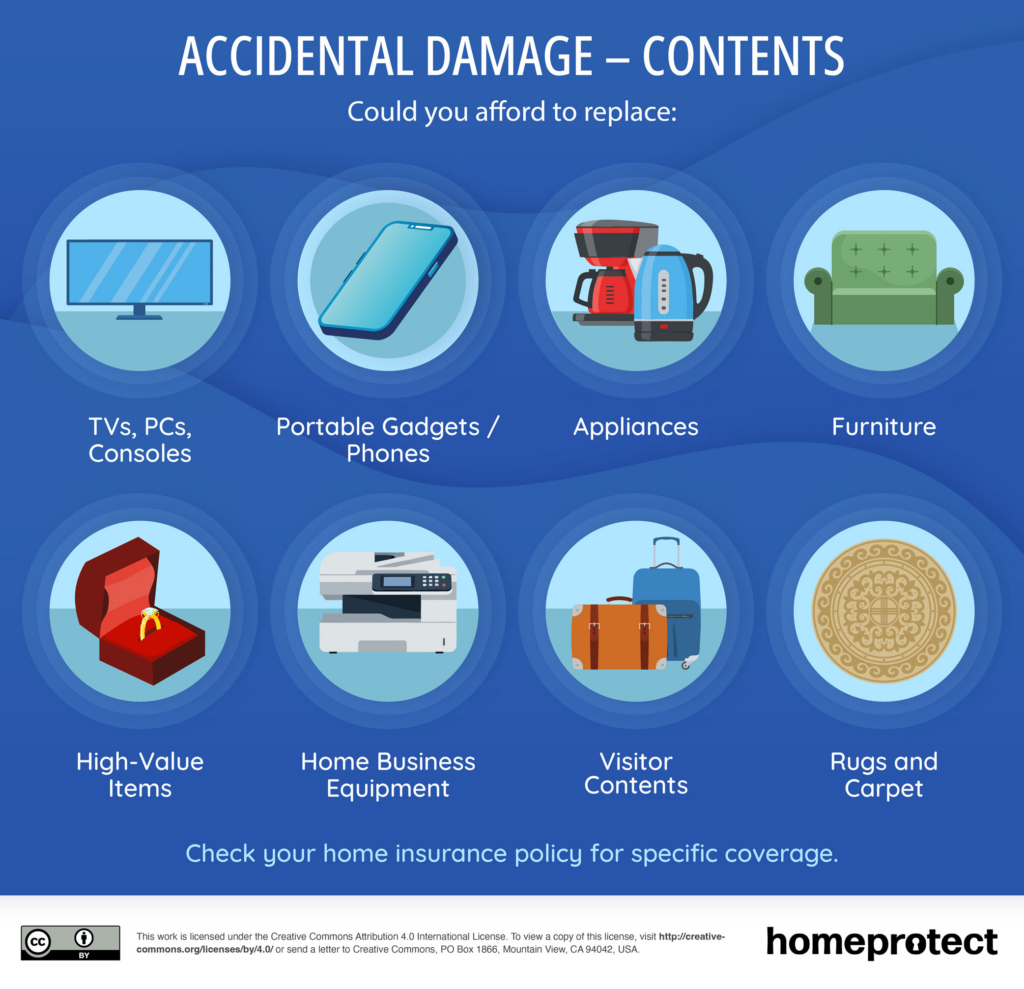
Accidental damage is often available as an optional upgrade to contents insurance policies. This is designed to cover mishaps that result in damage to belongings inside the property (e.g. knocking over a TV or spilling a drink on a laptop). Standard accidental damage on contents insurance typically covers mishaps within the home. Cover for personal possessions away from the home is usually a separate optional extension — check whether your policy includes this or whether it can be added. Please note that pet damage is also a common exclusion.
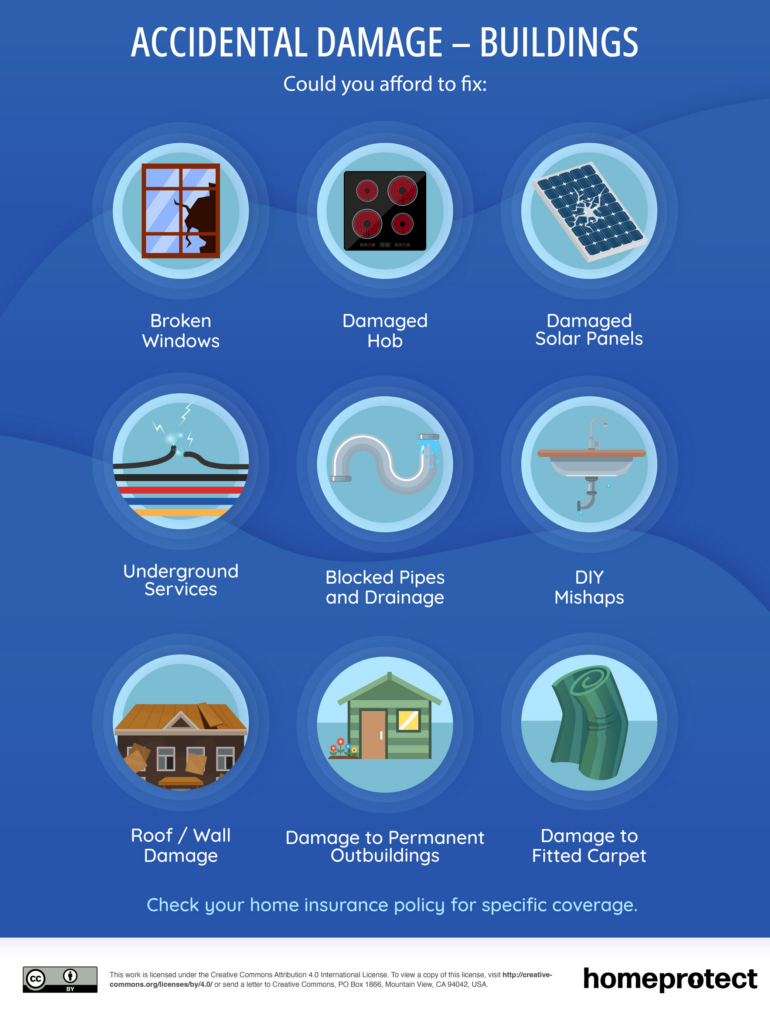
Accidental damage on buildings insurance provides cover for sudden, unintended damage to the property’s structure and fixtures (e.g. walls, floors, fittings). Examples include cracked basins, chipping a worktop, damage to the hob, drilling through pipes or cables. This type of cover typically excludes poor workmanship, gradual damage, wear and tear, and cosmetic-only damage.
Generally, tenants would be responsible for accidental damage they cause to a rental property, but you should check your tenancy agreement and inventory. Communicate promptly with your landlord or property manager if accidental damage occurs. Landlords may claim on their home insurance policy and may deduct reasonable costs from the tenant’s deposit.
Usually, tenants are liable for accidental damage caused to the landlord’s fixtures and fittings, beyond usual wear and tear. Tenants are generally responsible for their own belongings – contents accidental damage cover protects these. Separate tenants’ liability cover can protect against accidental damage to the landlord’s fixtures or fittings where the tenant is legally responsible.
It may be worth considering adding accidental damage cover to your contents insurance policy if you have higher-risk items (TVs, laptops, other electronic devices etc), have children, or a busy household. Without accidental damage cover, mishaps that affect your belongings are often not covered.
Your home insurance policy’s liability section may cover legal liability for accidental damage to a neighbour’s or another third party’s property if you were in some way negligent. If a contractor working on your property caused the damage, their public liability insurance would usually cover this.
Public liability insurance typically covers your legal liability for accidental third-party property damage or injury. Deliberate damage is often excluded.
Please note: Home businesses need separate public liability cover.
Fire is usually covered as standard on home insurance policies and therefore wouldn’t usually require an accidental damage policy add-on.
Escape of water (e.g. leaking appliances, burst pipes) is usually separate from accidental damage, however accidental damage may apply to the cause of the escape of water (e.g. drilling into a pipe).
Please note: Gradual leaks and poor workmanship are commonly excluded.
Many landlord policies offer an optional accidental damage add-on to buildings, contents, or combined cover. Damage by tenants specifically may be limited or require a “tenant damage” extension.
Tenants’ contents policies can offer optional accidental damage cover. A tenants’ liability add-on may also be available to cover any accidental damage to your landlord’s fixtures/fittings.
Accidental damage excess is the fixed amount stated in your policy that you would pay towards an accidental claim before the insurer settles the rest of the cost.
One-off incidents of accidental damage are usually handled via repair work which you may be charged for, or a deposit deduction. Serious and/or deliberate damage, ongoing negligence, or breach of tenancy terms could lead to more severe consequences, such as eviction or legal action.
If you accidentally cause damage to the building or contents of an Airbnb, tell the host immediately. You can use the Airbnb platform to report the damage. The host may have protection for these types of incidents, but guests can still be held responsible for the cost of any damage caused.
Please note: Your own home insurance or travel insurance policy may not cover you as a guest.
This guide provides general information only. Always follow manufacturer instructions and consult qualified professionals where appropriate. If you need specific information on your home insurance policy, check your policy booklet or contact your insurer.
Try our free home risk calculator
This quick and easy tool gives you a personalised risk score and practical tips to reduce risks (flooding, subsidence, accidental damage, storms, fire, escape of water, theft), which may help lower your premiums, using data from similar homes in your postcode or national averages where specific data isn’t available.
It provides general guidance only (not financially or insurance advice) and won’t directly affect your policy, premium, or any claims.

Get a home insurance quote online
Get a quote online in less than 10 minutes*