

Escape of water guide


A homeowner’s guide to understanding water damage and reducing your risk.
What is Escape of Water?
Water escaping inside the home is one of the most common causes of household damage in the UK - and one of the most preventable. This guide explains what “escape of water” means, how it differs from flooding and water ingress, and the practical steps you can take to lower your risk. It includes a room-by-room checklist, plus advice for homes that are lived in and for properties left empty for weeks or months at a time.
This is general guidance to help you protect your home and reduce the chance of water damage. It is not a statement of insurance policy terms.
What does “escape of water” mean?
Escape of water is the term the insurance industry uses for water that escapes from a system or appliance inside your home that is designed to hold or carry it. In plain terms, it is water going where it should not - because something indoors has leaked, burst or overflowed.
Common sources of an escape of water include:
- Burst or leaking pipes, including those hidden under floors or inside walls
- Fixed heating systems, such as radiators, boilers and the pipework that serves them
- Water tanks and hot water cylinders
- Baths, showers, sinks and their connecting pipes
- Plumbed-in appliances, such as washing machines, dishwashers and fridges with water dispensers
- Toilets or cisterns overflowing because of a blockage
- Aquariums and water features, if a part fails or breaks
The key idea is that the water comes from inside the property’s own plumbing, heating or appliances. An escape of water can also affect you when the source is in a neighbouring home - for example, if a flat above yours has a leak that travels down through the ceiling.
Escape of water vs flood vs water ingress
People often use the word “flood” for any unwanted water in the home, but the insurance industry treats water damage as several distinct categories. Knowing the difference helps you understand the risk and explain a problem clearly if one ever arises.
| Term | Where the water comes from | Typical example |
| Escape of water | Inside the property - from plumbing, heating or a plumbed-in appliance. | A burst pipe, a leaking radiator, or a washing machine hose that fails. |
| Flood | Outside the property - a large or sudden body of water entering from the environment. | A river bursting its banks, or surface water after very heavy rain. |
| Water ingress | Through the building envelope - water seeping in through the structure itself. | Rain getting in through a damaged roof, failed pointing or blocked gutters. |
The simplest way to remember it: escape of water comes from inside; flood comes from an outside body of water; water ingress seeps in through the building itself.
A quick word on damp and condensation
Damp and condensation are different again. They usually build up gradually over time, often through everyday living or a maintenance issue, rather than from a sudden leak or an external water source. Because they develop slowly, they are generally treated as separate from escape of water.
Why escape of water matters
Escape of water is consistently one of the most frequent and most expensive types of household water damage in the UK. There are a few reasons it can be so damaging.
Damage can spread fast - or hide for months
A burst pipe can release a large volume of water in a very short time, soaking floors, ceilings and belongings before anyone notices. At the other extreme, a slow leak behind a wall or under a floor can drip unseen for weeks or months. By the time it shows, it may have already caused serious harm to the structure of the home.
The knock-on effects add up
Water rarely stops at the first surface it touches. A single leak can lead to several types of secondary damage:
- Structural damage - swollen floorboards, ruined plaster, weakened ceilings and rotting timber.
- Electrical hazards - water reaching wiring, sockets or fuse boards, which can be dangerous as well as costly.
- Mould and mildew - persistent damp creates the conditions for mould, which can affect both the building and indoor air quality.
- Damage to belongings - furniture, carpets, electronics and sentimental items can all be lost.
Acting quickly when you spot a problem is one of the most effective things you can do to limit the harm an escape of water causes.
Which homes are most at risk?
An escape of water can happen in any home, but some properties carry a higher risk than others:
- Older properties - older plumbing is more prone to corrosion and wear, and can be harder to reach for repairs.
- Unoccupied properties, second homes and holiday homes - a leak can go unnoticed for far longer when no one is there, allowing more damage to build up.
- Flats and shared buildings - shared pipework means one leak can affect several homes, and water often travels downwards between flats.
- Homes with complex plumbing - multiple bathrooms, underfloor heating and water features all add more points where something can go wrong.
Early warning signs of an escape of water
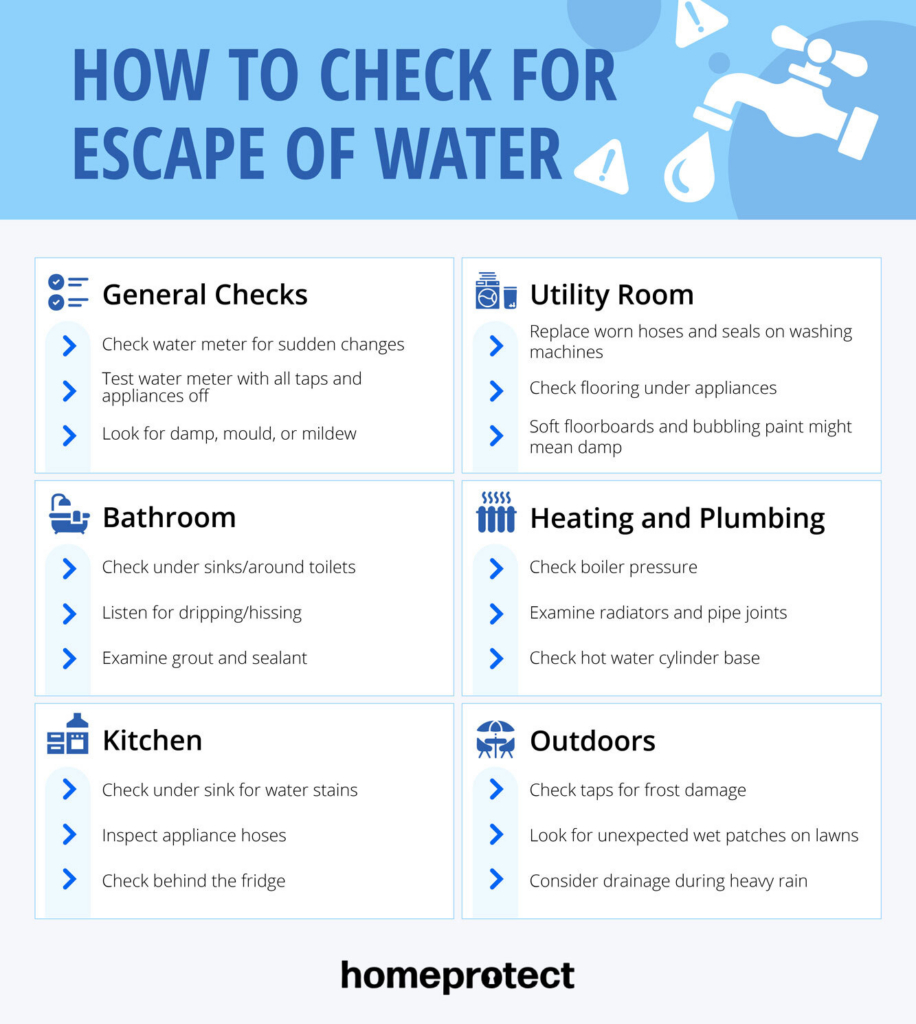
Catching a leak early is one of the best ways to limit the damage. Look and listen for:
- Unusual water meter readings, or a drop in boiler pressure
- Damp patches, stains or bubbling paint on walls or ceilings
- A persistent musty smell
- Mould growth, or condensation that lingers near pipe runs
- The sound of trickling or running water when everything is switched off
- Warm or cold spots on walls or floors
- Soft or spongy flooring
Room-by-room prevention checklist
Most escapes of water can be made far less likely with some straightforward habits and checks. Here is what to look at in each part of your home.
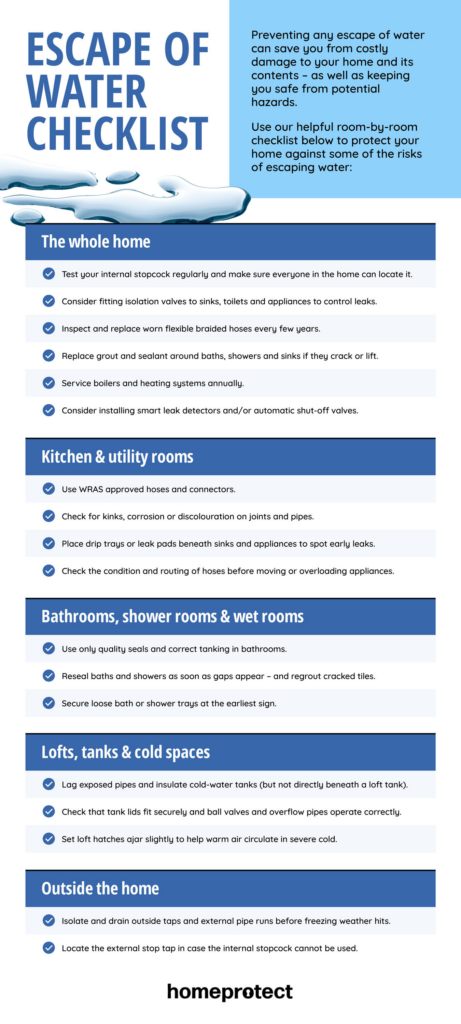
The whole home
- Find and test your internal stopcock regularly, label it clearly, and make sure everyone in the household can locate it. It shuts off your water supply, and in an emergency being able to use it within seconds can stop a small problem becoming a major one.
- Where possible, fit isolation valves to sinks, toilets and appliances, so you can shut off water to one fixture without turning off the whole house.
- Inspect flexible braided hoses for wear, and replace them at the first sign of a problem or proactively every few years.
- Renew grout and sealant around baths, showers and sinks as soon as it cracks or lifts, to keep water from working its way behind tiles and surfaces.
- Have your boiler and heating system serviced every year by a qualified engineer.
- Consider fitting smart leak detectors and automatic shut-off valves (more on these below).
Kitchen and utility room
- Use good-quality hoses and connectors that meet UK water-fitting standards (look for WRAS approval), and check joints and pipes for kinks, corrosion or discolouration.
- Place drip trays or leak pads beneath sinks and appliances, so a small leak is caught early before it can spread.
- Check flooring under and behind appliances such as washing machines, dishwashers and fridges for any sign of moisture.
- Before moving or overloading an appliance, check the condition and routing of its hoses so they cannot kink or pull loose.
Bathrooms, shower rooms and wet rooms
- Good-quality seals and correct tanking (waterproofing) are essential in wet areas.
- Reseal baths and showers as soon as gaps appear, and regrout cracked tiles promptly.
- If a bath or shower tray moves when you step on it, secure it without delay - movement breaks down seals faster and lets water escape.
Lofts, tanks and cold spaces
- Lag exposed pipes and insulate cold-water tanks - but do not insulate directly beneath a loft tank, so a little warmth can still reach it.
- Check that tank lids fit securely, and that ball valves and overflow pipes work correctly.
- In severe cold, leaving the loft hatch slightly ajar can help warm air circulate and reach pipework.
Outside the home
- Before freezing weather, isolate and drain outside taps and any external pipe runs.
- Find out where your external stop tap is - sometimes at the property boundary - in case you ever cannot use the internal stopcock.
- Keep gutters and downpipes clear so water drains away from the building, especially during heavy rain.
Protecting against winter freezing
Cold weather is one of the biggest triggers for escape of water. When water freezes it expands, which can split a pipe; as the ice thaws, the water pours out. To reduce the risk:
- During cold spells, keep the heating on at a low background temperature (typically around 12–15°C) rather than turning it off completely.
- Open internal doors and cupboards so warm air can reach pipes behind panels and under sinks.
- Insulate exposed pipes and your water tank, particularly in lofts, garages and other unheated spaces.
- Fix dripping taps and overflows, as standing water in pipes is more likely to freeze.
Reducing the risk in an unoccupied home
An empty home carries extra risk, because a leak that starts while no one is there can run undetected for a long time. The right precautions depend on how long the property will be empty.
Away for a short period (around 30+ days)
If you are leaving the property empty for several weeks - an extended holiday, a work placement, or while it is between occupants - a few extra steps make a real difference:
- Turn off the water supply at the internal stopcock before you leave, so a leak cannot keep feeding itself.
- In cold weather, leave the heating on a low setting on a timer to keep the property above freezing.
- Ask a trusted neighbour, friend or family member to check the property regularly for any sign of water.
- Clear gutters and downpipes beforehand, so winter weather is less likely to cause problems while you are away.
- Make sure someone can contact you quickly, and has access, if a problem is found.
Away for a long period (around 180+ days)
A property left empty for many months - perhaps undergoing probate, awaiting sale, being renovated, or used only seasonally - needs the most thorough protection. The longer a home stands empty, the longer an undetected leak has to cause damage.
Drain down the water system
For a long absence, the most reliable safeguard is to have the water system fully drained down by a qualified plumber, so there is little or no water in the pipes to escape in the first place. This is particularly worthwhile over winter. Check too that loft insulation is not chilling tanks and pipework excessively.
Keep up regular, recorded checks
- Arrange frequent inspections - by a person or a managing agent - rather than leaving the property unattended.
- Keep a simple record of when checks were carried out, which is good practice for any empty property.
- Deal with any maintenance issue promptly; small problems grow quickly in an unattended home.
Consider remote monitoring
Remote-monitoring leak detectors and smart sensors are especially valuable in a long-term empty property, alerting you or a managing agent to water, low temperatures or movement even when no one is on site.
Smart leak detection and monitoring
Technology can give you an early warning, and sometimes act on its own:
- Point-of-leak sensors in kitchens, bathrooms and lofts can alert you - often through your phone - the moment they detect moisture.
- Inline flow monitors can spot unusual water usage and shut off the supply automatically.
- Some smart meters and boiler systems can flag unexpected drops or rises in pressure.
These devices are an increasingly affordable way to catch a problem early, particularly for leaks in places you cannot easily see.
Flats and shared buildings
In a block of flats or a shared building, water can travel quickly between homes - especially downwards. To reduce the risk and react fast:
- Keep contact details for your neighbours and the managing agent to hand.
- Report any leak immediately, whether it starts in your home or affects you from elsewhere in the building.
- Be aware of where shared pipework runs, so you can describe a problem clearly if one arises.
Landlords and tenants
Responsibilities differ, but prevention is a shared interest:
- Landlords are generally responsible for the structure and the water and heating systems, so regular inspections, pipe lagging and prompt repairs help prevent damage and disruption for tenants.
- Tenants should report any leak immediately to the landlord or managing agent, and can take simple steps such as knowing where the stopcock is.
What to do if you find a leak
Acting quickly limits the damage. If you discover an escape of water:
- Stay safe first. If water is near electrics, switch off the electricity at the consumer unit - but only if it is safe to reach.
- Turn off the water. Use the internal stopcock to stop the flow, and open the cold taps to drain the system. For a heating-system leak, turn off the boiler and isolate the system only if you know how.
- Protect your belongings. Move items out of harm’s way, and use buckets and towels to mop up. Begin ventilating the area to help it dry.
- Record what happened. Take photos or video of the source, the affected rooms and any damaged items.
- Call a qualified plumber to stop the leak and make the property safe.
Drying out and preventing mould
After an escape of water, drying the property thoroughly helps prevent mould and lasting damage:
- Encourage airflow by opening windows (weather permitting) and running extractor fans.
- Use dehumidifiers and empty them regularly.
- Lift and dry rugs and cushions, and move furniture off damp floors to prevent staining and warping.
- Remove standing water promptly with towels and mops.
- For significant water damage or mould, consider professional help.
Timber, plaster and subfloors can take weeks to dry completely, so allow enough time before redecorating, to avoid trapping moisture.
Frequently asked questions
Escape of water is when water leaks out from your home’s own plumbing, heating system or a plumbed-in appliance - for example, from a burst pipe, a leaking radiator or a faulty washing machine. It means water has ended up somewhere it should not be because something inside the home has failed.
No. A flood involves water entering your home from an outside source, such as a river bursting its banks or surface water after heavy rain. Escape of water comes from inside the property. Insurers treat the two as separate categories of water damage.
Generally no. Rain getting in through a damaged roof, windows or walls is usually classed as water ingress (or, depending on the cause, storm damage) rather than escape of water, because it comes through the building structure rather than from your internal plumbing.
Burst and leaking pipes are among the most common causes, along with failures in heating systems and leaks from plumbed-in appliances such as washing machines and dishwashers. Cold weather, which can freeze and split pipes, is a frequent trigger in winter.
Turn the water off at the stopcock, keep the property from freezing (by leaving the heating on low or having the system drained down), and arrange for someone to check the property regularly. For long absences, fully draining the system and using remote leak monitoring offer the strongest protection.
Act quickly. Turn off the water at the stopcock to stop the flow, switch off electrics in the affected area if it is safe to do so, and move belongings out of harm’s way. Then arrange for a qualified plumber to find and fix the source. Dealing with a leak promptly is one of the best ways to limit the damage.
This guide is intended for general awareness and education, to help you understand escape of water and reduce the risk of water damage to your home. It is not a statement of insurance policy terms.

Get a home insurance quote online
Get a quote online in less than 10 minutes*
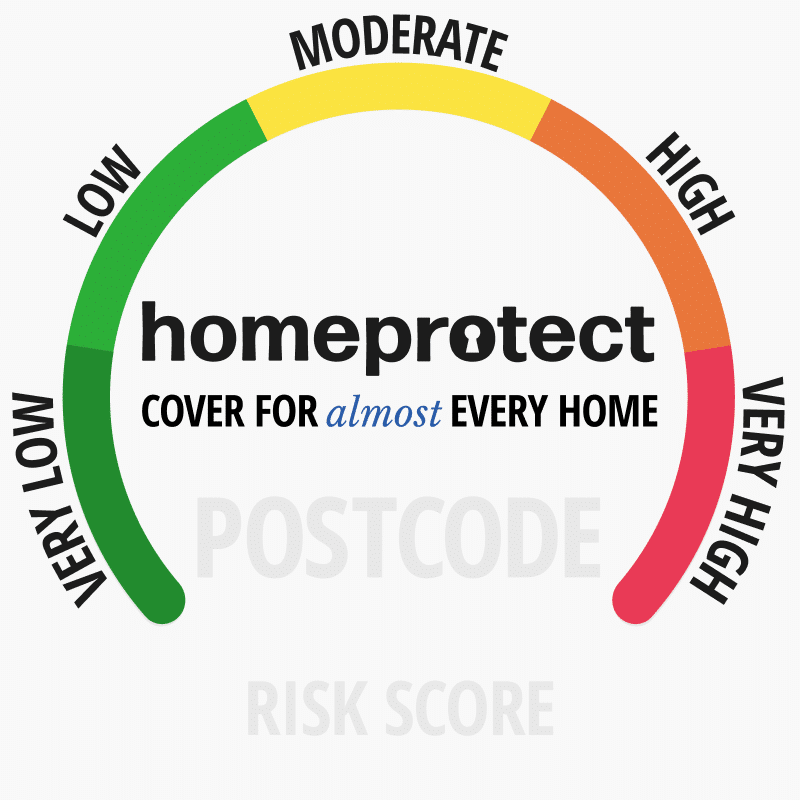
Try our free home risk calculator
This quick and easy tool gives you a personalised risk score and practical tips to reduce risks (flooding, subsidence, accidental damage, storms, fire, escape of water, theft), which may help lower your premiums, using data from similar homes in your postcode or national averages where specific data isn’t available.
It provides general guidance only (not financially or insurance advice) and won’t directly affect your policy, premium, or any claims.