

Flood Risk guide


Before a flood
Pre‑flood preparation
When a flood alert or warning is issued, to help reduce potential flood damage, take these immediate steps:
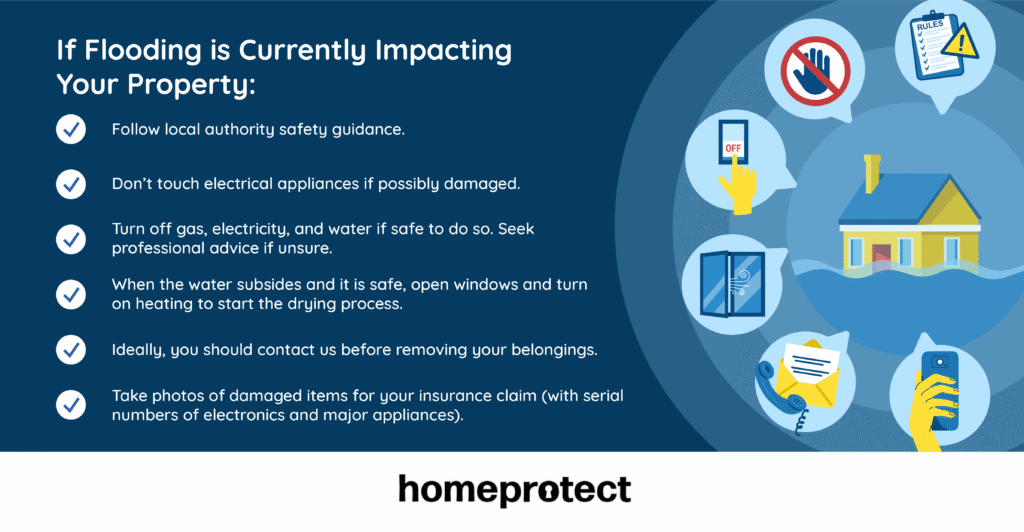
- Consider moving items to an area unlikely to be affected by flood, such as upstairs, where possible. Unplug electrical items if it is safe to do so.
- Put plugs in sinks and baths to prevent sewage water backflowing into your home.
- Place sandbags or hydro sacks by doors. If you don’t have these, a pillowcase or a plastic bag filled with garden soil is a useful alternative.
- Register for flood alerts with the Environment Agency to keep informed:
Check your cover:
Please review your policy schedule for any endorsements or special terms that might affect your cover. Your policy excludes damage to outdoor fuel tanks, hot tubs, swimming pools, tennis courts, walls, gates, or fences unless your home itself is also affected at the same time by the same original cause.
What to keep to hand:
Your insurer’s 24/7 claims number, your policy number, Floodline 0345 988 1188, local council emergency contacts, utility providers, and a trusted neighbour or keyholder.
Excesses, limits, and how to find them
Your flood excess and any limits are shown on your policy schedule and cover summary. Please note they may be higher if your address has a history of flooding or is high risk. Check your most recent renewal or online account for the schedule and look in the policy wording for any special limits.
Yes, many policies apply a separate flood excess, which can differ from the standard escape of water or accidental damage excess.
It’s set based on property flood risk, postcode/history, mitigation measures and insurer criteria. It is stated separately for buildings and for contents in your policy booklet (if you have combined cover).
For more information, visit our information page on Flood Re.
Flood history and eligibility
Insurers can confirm claims made on your current policy but typically can’t share previous owners’ claims due to data protection, but public sources like Environment Agency flood maps and property searches can indicate local risk. Cover is usually still available after a past flood, sometimes with a higher excess or via schemes like Flood Re for eligible UK homes.
Flood Re is a UK scheme helping insurers offer affordable flood cover for eligible homes at higher flood risk.
Core eligibility highlights:
– UK domestic property with a Council Tax band (A–H in England/Scotland; A–I in Wales).
– Built before 1 January 2009.
– Not a commercial property; certain multiunit/leasehold arrangements for buildings cover may be excluded (contents can still be eligible).
The flood element of your premium may be set to a banded amount (based on Council Tax band), often reducing cost in high risk areas. The rest of the premium still varies by risk and insurer.
For more information, visit our information page on Flood Re.
Flood resilience measures
Recognised property flood resilience measures (such as flood doors, demountable barriers, airbrick covers, non‑return valves, raised electrics, water‑resistant plaster, and tiled floors) can reduce disruption in the event of a future flood, and may influence underwriting or qualify for “Build Back Better” funding after a valid flood claim with participating insurers. To evidence improvements, keep dated invoices, product specs, accreditation certificates and clear photos. Preventative costs before any loss (like buying barriers or installing pumps proactively) are usually not claimable unless part of an approved resilience programme following a claim.
To check if your home is at risk of flooding, use the online resources below:
England: Use the longterm flood risk map for rivers/sea/surface water, and for live warnings
Scotland: SEPA flood maps
Wales: Natural Resources Wales (Flood Risk Assessment Wales)
Northern Ireland: Flood Maps NI
Tenant and leaseholder responsibilities
Tenants generally protect and claim for their own contents and additional living costs under their contents policy, while the landlord or freeholder’s buildings policy handles the structure. If you are a tenant, particularly if you live in a flood-prone area, it’s worth discussing with your landlord if there are any flood protection steps you should take, either routinely, or in the event of a flood.
Unoccupancy conditions
Unoccupancy conditions often apply if the home is empty for more than a set period (commonly 30 or 60 days) and may require regular inspections and maintenance. Some policies may have other restrictions so tell your insurer if you’ll be away for a prolonged period. Check your rebuild cost using a reputable calculator (for example, BCIS) to ensure your buildings sum insured is adequate.
Flooding is defined as an inundation of normally dry land from an external source (e.g. river/sea, surface water run-off after heavy rain, overwhelmed drainage). Typically, external and widespread/localised inundation. Escape of water is water leaking from internal plumbing/heating/appliances (e.g., burst pipe, leaking tank, dishwasher). Storm claims are for damage caused by high winds and associated rain/hail/snow.
You’ll need to check your policy documents to be sure. Buildings insurance usually covers flood damage to the structure and fixtures (e.g., walls, floors, fitted kitchen, built-in wardrobes). Contents insurance usually covers flood damage to belongings (e.g., furniture, electronics, carpets/rugs that are not permanently fixed). Many policies include flood as standard, but terms, availability and excess may vary by address/risk.
Many insurers cover buildings damage to basements from flood but often apply stricter terms to contents below ground level. Common limitations include exclusions or caps for contents kept in cellars/basements (especially flooring, entertainment equipment), or requirements to store items above floor level.
Permanent external fixtures (patios, paths, drives, walls) are often included in your Buildings cover. Sheds/outbuildings are usually included but may have limits. Moveable garden items and plants are often excluded or limited for flood. Fences and gates are frequently excluded or limited for storm and may also have limits/exclusions for flood.
When rivers, estuaries or the sea overflow, or heavy rain overwhelms the drains, it’s usually classed as a flood. Some policies don’t cover damage caused by rising groundwater pushing up into the property. If sewers or drains back up because of a blockage or overload, it’s more likely treated as an escape of water rather than flood.
During a flood
If you’re currently impacted by flooding
Personal safety comes first.
Never wade through fast‑moving or contaminated water. Call 999 if there is a risk to life.
If it is safe to do so:
- Where possible, move items to an area not affected by flood. Only move what you can safely manage to protect your belongings.
- Contact your insurer before removing any flood damaged items. If items must be removed, please take photographs for your own records and for your insurance claim.
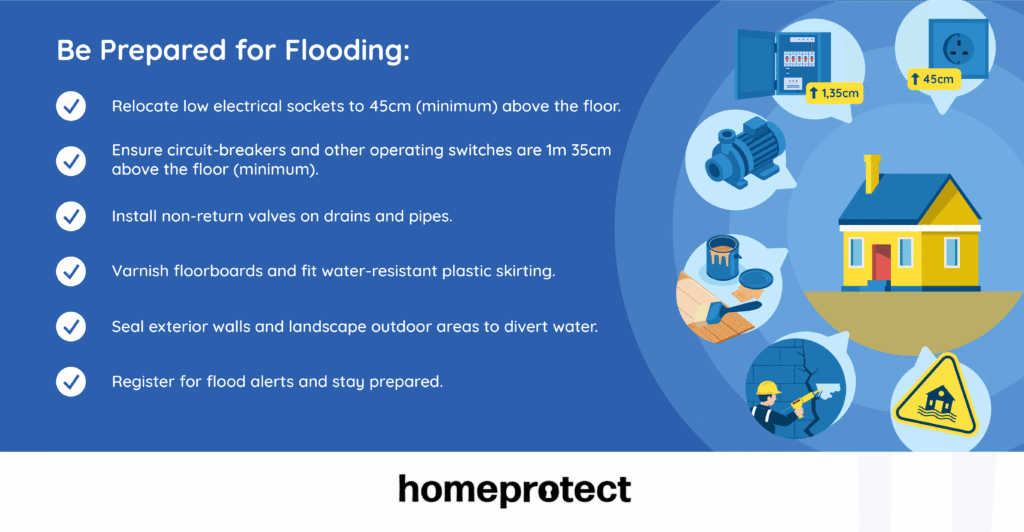
- Turn off gas, electricity, and water at the main source, but only where it is safe to do so. If you are unsure if it is safe to do so, please seek professional advice. Avoid touching any connected electrical appliances that could be damaged.
- Follow any local authority safety guidance.
Sewer backup may be covered as either an “escape of water” or “flood”, depending on cause and the policy wording. Check your policy for any exclusions and the applicable excess.
If the sewer backed up into your home, prioritise health and safety above all else, document damage, and report the claim to your insurer. Report the incident to your water and sewerage company, as they’re responsible for public sewers and may provide cleanup and/or compensation under Guaranteed Standards of Service (GSS) if the public sewer caused the flooding.
Please note that backups from private drains (within your boundary) are typically your responsibility; public sewer issues are usually the water company’s responsibility.
No, home insurance does not cover motor vehicles. Flood damage to cars, vans or motorbikes is a motor insurance matter (usually under comprehensive cover).
Alternative accommodation
If your home is uninhabitable due to insured flood damage, most home insurance policies fund reasonable alternative accommodation for you and your household within the stated limit and time frame. Insurers can often arrange accommodation directly or reimburse you if you book it yourself – keep all receipts and coordinate with your claims handler before committing to long stays.
Denial of access, essentials, storage and helplines
If flooding or official cordons prevent access to your street or home, many policies include a denial‑of‑access extension that can fund accommodation and necessary expenses within limits even without direct damage; your handler will confirm eligibility and caps. Insurers can arrange or reimburse essential purchases like clothing, toiletries, baby supplies and school items when you’re evacuated—keep receipts and agree thresholds in advance where possible. The reasonable cost of secure storage for salvageable items is often covered while repairs are underway. Most insurers operate 24/7 helplines and may prefer approved contractors for faster attendance and guaranteed work; using them is usually optional but can simplify the process. Some policies extend to cover evacuation or denial‑of‑access costs when a local authority orders you to leave or when surrounding damage prevents safe access, even if your home is not directly damaged.
Most home insurance policies include alternative accommodation when the home is uninhabitable due to an insured event (e.g. flood). It may apply under buildings (owner-occupier) and/or contents (tenants) sections so be sure to check your policy wording. “Uninhabitable” typically means when essential services are unavailable, the property is unsafe/unsanitary (e.g. sewage contamination), or major rooms can’t be used. The insurer must agree it’s uninhabitable.
After a flood
We know that recovering after a flood can be challenging. If your home has been damaged, we’re here to support you through every step.
Here’s what to do next:
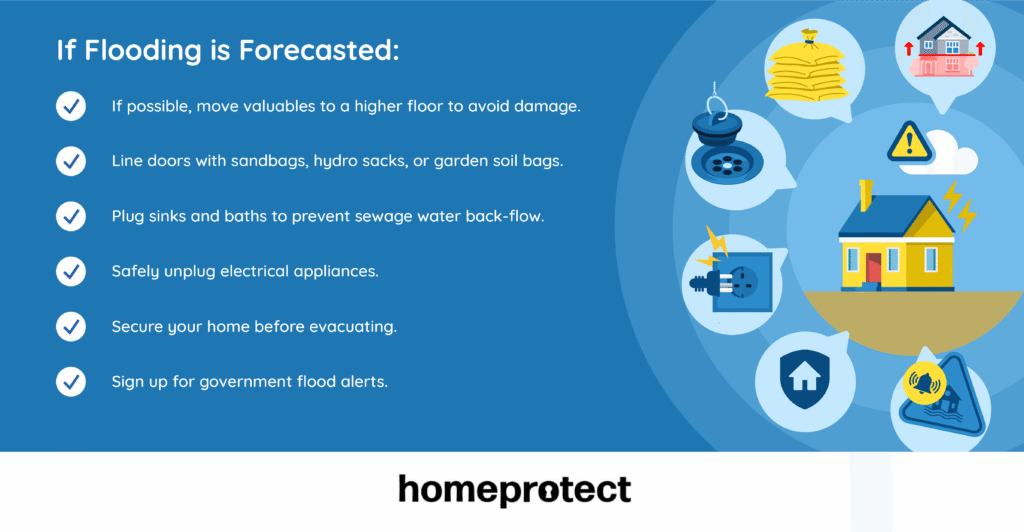
- Where possible contact us before removing any flood damaged items. If items must be removed, please take photographs for your own records and for your insurance claim. We recommend taking photographs that include model/serial number.
- You can begin the natural drying process by opening windows whilst you are present, and turning the heating on if it is safe to do so
Long-term flood prevention tips
During reinstatement, consider flood prevention measure such as:
- Relocating low electrical sockets to a minimum height of 1.5m above the floor.
- Install non-return valves on drains and pipes, varnish floorboards, or fit water-resistant plastic skirting.
- Seal exterior walls and landscape outdoor areas to divert water away from buildings.
- Register for flood alerts and stay prepared.
What are loss adjusters?
A loss adjuster is an independent specialist appointed by the insurer to verify the cause, assess damage, agree the scope of works and help progress your claim; you may also see surveyors, drying technicians and specialist restorers.
If it’s safe to do so, you can start to move items out of standing water, ventilate your property, and start pumping/boarding, if possible, to prevent further damage. Photograph everything first, keep samples of floor coverings and underlay, and retain damaged high value items. Avoid irreversible repairs or throwing away non-hazardous items until you’ve spoken to your insurer. Keep receipts for any emergency works.
Post-flood cleanup
You can start cleaning once it’s safe and you’ve photographed the damage; retain small samples of ruined floor coverings and a short list of discarded items (especially contaminated soft furnishings) to help validation. Professional decontamination is typically covered when floodwater or sewage has entered the property, including disinfecting, stripping out and safe disposal. Your insurer or their restoration partner will usually provide dehumidifiers and a drying plan; timescales vary from weeks to months depending on materials, construction and weather. Initial contact is commonly within 24 hours of notification and site visits are prioritised by vulnerability and severity, though large‑scale events can stretch times—your handler will keep you updated.
Post-flood repairs
Insurers often offer vetted suppliers for surveying, drying and repairs with workmanship guarantees; you can usually use your own contractor instead, but you’ll need to provide comparable itemised estimates and agree scope and rates in advance. Cash settlements are available in many cases and are typically based on the agreed cost of repair or replacement, less any applicable excess and deductions where the policy pays market value; VAT is only paid if you’re VAT‑registered or you incur it on invoices. You’re free to upgrade materials or redesign rooms during reinstatement, but the insurer pays the like‑for‑like cost and you fund any betterment or non‑damage‑related works.
Regulatory approvals and hazardous materials
Significant reinstatement may require Building Control approval—your contractor or insurer’s network will advise and handle notices where needed. Where there’s a risk of asbestos in older artex, tiles or insulation, an appropriate survey is arranged before strip‑out; licensed removal is covered when it’s necessary due to insured damage.
Mould
Mould that develops as a direct result of the flood and despite reasonable steps to ventilate and dry is usually treated as resultant damage and may be covered within the claim; long‑term damp, condensation or pre‑existing issues are not.
Resilience upgrades
Some insurers participate in “Build Back Better”, which can provide up to £10,000 after a valid flood claim to install resilience measures such as waterproof plaster, raised electrics and flood doors; outside BBB, funding resilience instead of like‑for‑like is at the insurer’s discretion.
It depends on safety and habitability. A habitable property should have a working kitchen and bathroom, safe electrics, no sewage contamination, manageable dust/noise, and adequate heating/ventilation. Households with young children and/or people with health conditions or mobility needs may need to move out. If staying would be unsafe or unreasonable, discuss accommodation options with your insurer and follow professional safety advice. Do not remain in the property if you’re advised it’s unsafe.
Typical phases are triage/strip out which can take days or weeks, depending on the severity of the damage. Completely drying out the property can take several weeks, even months. Timescales will depend on flood depth/duration, construction type (solid walls, timber floors), season and humidity, contamination, need for surveys (e.g., asbestos), availability of restorers/contractors, supply chains for materials, and any approvals needed (building control, freeholder).
Build Back Better (BBB) is a UK initiative led by Flood Re that lets participating home insurers fund property flood resilience measures up to £10,000, on top of standard like-for-like repairs, after a valid flood claim.
Council tax reductions/exemptions
Local authorities may offer council tax reductions or exemptions when a home is uninhabitable due to flood repairs; you’ll typically need a letter from your insurer or contractor confirming the dates and circumstances, so ask your handler for supporting documentation.
Making a claim on flood risk insurance
The quickest way to submit a claim is online. You’ll be able to review your policy cover and excesses before deciding to Submit a claim here.
If preferred, you can also call our insurance experts if you’re looking to make a claim: 0330 660 0660.
Contact your insurer as soon as you’re able to do so. Provide your policy number, address, date/time and suspected cause of the flood, whether the property is habitable or not, any vulnerable people in the household, actions taken to make the situation safe, and the best contact details. Mention any emergency services attendance, access issues, and urgent needs (accommodation, essentials).
Proof of ownership and documentation
Good evidence speeds settlement: keep purchase receipts, valuation certificates for high‑value items, serial numbers, photos or videos of rooms and contents, and bank/credit card statements showing purchases. After a flood, take photos and videos of damage before moving or discarding items, keep samples of floor coverings where possible, and compile a room‑by‑room list noting brand, model, age and original/replacement cost. If you lack receipts, alternative proof like manuals, warranty emails, screen grabs of similar models and witness statements can help corroborate ownership and value.
Take photos/videos of every affected room and outside areas, showing waterlines and damage before moving items. Make a room-by-room inventory with brand, model, age and estimated replacement cost. Record serial numbers for appliances/electronics. Keep receipts, valuations and bank/credit statements. If these aren’t available, use manuals, warranty emails or photos of yourself using the item. Keep small samples of damaged flooring/soft furnishings and photograph anything you must dispose of for hygiene or safety reasons.
Vulnerability and support
Tell your insurer if anyone in the household is vulnerable (for example, due to age, disability, health or financial circumstances) so they can adapt communications, prioritise visits, arrange quicker payments or provide other tailored support. Advance payments can often be made for urgent needs once basic checks are complete; keep open communication and let your handler know about any access constraints or safeguarding issues.
This is sometimes possible. If your property is uninhabitable or you have urgent unexpected costs, you can ask your insurer for an interim payment and explain what it will cover (e.g., clothing, toiletries, temporary accommodation, essential furniture). You will likely be asked to provide basic claim details and receipts/estimates. Any advance will be offset against the final settlement.
Settlements on contents insurance
Contents are commonly settled on a new‑for‑old basis (with some exceptions for wear‑and‑tear items like clothing under certain wordings); where market value applies, reasonable depreciation is taken into account, all subject to any single‑item and total‑sum limits.
It can. Insurers may adjust price or apply a higher flood excess at renewal after a claim, considering factors like claim severity/frequency, local risk data, and any resilience measures installed. For eligible homes, market schemes such as Flood Re can moderate flood related pricing.
Often a claim will reduce or remove a no claims discount unless it’s been protected. The impact varies by insurer and may lessen again after a claim-free period.
Considering buying a property in a flood prone area?
Understand the risk
- Check official maps: England (Environment Agency), Scotland (SEPA), Wales (Natural Resources Wales) for river/sea, surface water and (where available) groundwater risk. Sign up for local flood warnings.
- Ask the seller for written details of any past floods (dates, depths, photos, repairs) and any resilience measures installed, with invoices/certificates.
- Look in the area for low‑lying access roads, nearby watercourses, signs of previous flooding and the presence/condition of property‑level defences.
Check insurability and costs early
- Get indicative buildings/contents quotes before you commit to moving in, confirming that flood cover is available. Remember to factor in a potentially higher excess to your costs.
- Ask whether the home is likely to be eligible for Flood Re (typically UK residential, pre‑2009 build, council‑tax banded).
- If it’s a leasehold property, request the property’s buildings insurance schedule, flood cover/excess (finding out who would pay this in the event of a claim), and any recent claims.
Survey and resilience
- Commission a RICS survey. For higher‑risk properties, add an independent Property Flood Resilience (PFR) assessment.
- Check for flood doors/barriers, airbrick covers, non‑return valves, sump pumps with battery backup, raised electrics/boilers, water‑resistant finishes.
- Clarify ongoing maintenance (e.g., pump servicing, barrier storage) and likely running costs.
Try our free home risk calculator
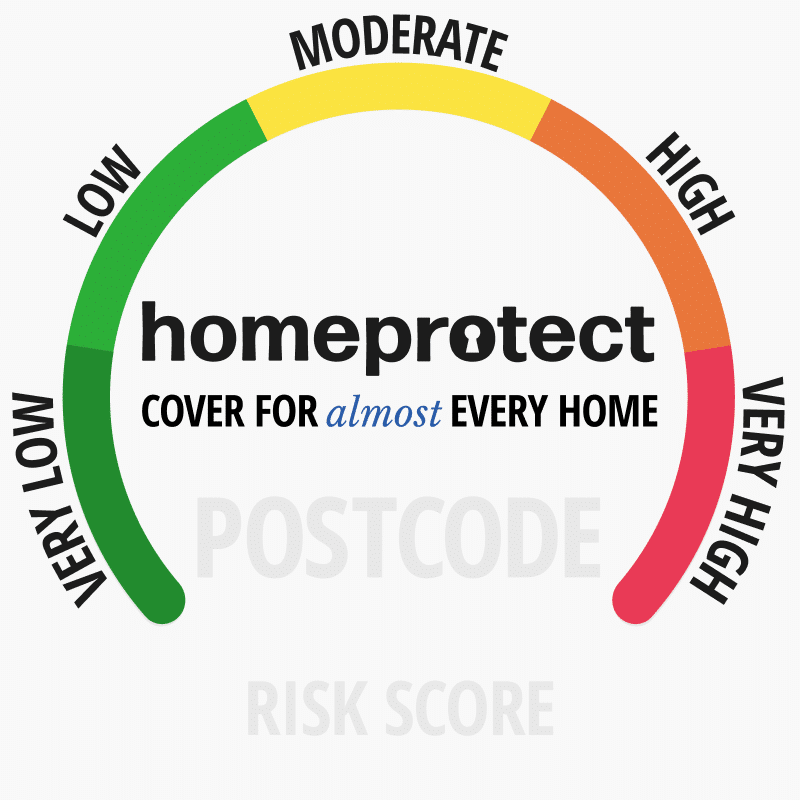
This quick and easy tool gives you a personalised risk score and practical tips to reduce risks (flooding, subsidence, accidental damage, storms, fire, escape of water, theft), which may help lower your premiums, using data from similar homes in your postcode or national averages where specific data isn’t available.
It provides general guidance only (not financially or insurance advice) and won’t directly affect your policy, premium, or any claims.

Get a home insurance quote online
Get a quote online in less than 10 minutes*