

Home fire risk guide


Your fire risk is calculated based on the likelihood and potential impact of a fire occurring in your property. From April 2022 to March 2023, there were 27,166 fires in homes (referred to as “dwelling fires”) in England alone.
Common causes of household fires
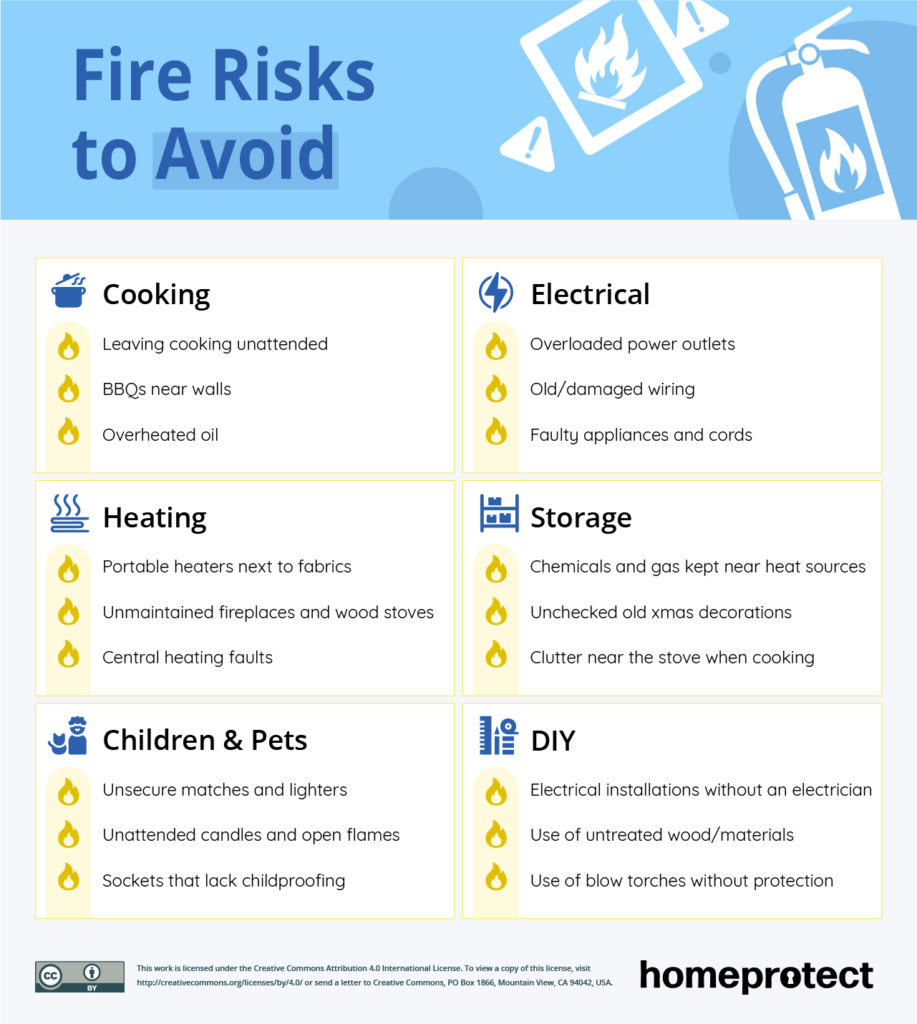
- Leaving cooking unattended
- Faulty or overloaded electrical appliances (and/or wiring)
- Cigarettes and matches
- Candles and other open flames
- Heating systems (e.g. open fires, wood burners, portable heaters)
- Improper storage of flammable materials
Assessing your property’s fire risk
Certain factors can make your property more vulnerable to fire:
- Older properties, or properties with timber frames and/or outdated electrical systems
- Properties with open fireplaces or wood burners
- If the property is left unoccupied
- The number of occupants and their habits
Some rooms in the home carry higher risk than others – the kitchen in particular, as this is where the majority of house fires start, usually due to cooking incidents.
How to prevent fires in your home
Protecting your home from fire damage means having the right equipment, implementing regular safety measures, and using common sense.
Fire alarms and smoke detectors
These are a must-have in your property. Fit at least one smoke alarm on every floor, ideally near to the kitchens and bedrooms. You can choose from optical, ionisation, or heat alarms based on your property and/or personal preference. According to Fire England, alarms should be tested at least monthly to ensure the batteries do not run out.
Fire extinguishers and fire blankets
There are many types of fire extinguisher, used for different types of fires. Read up on what extinguishers work on which fires and keep the right type in kitchens and garages. For safe use of a fire extinguisher, follow the PASS method: Pull, Aim, Squeeze, Sweep.
Never use water on oil fires – use fire blankets.
Electrical fires
Electrical fires can often be prevented by not overloading sockets and extension leads. Also, check your appliances for frayed cables and broken plugs. Get them repaired immediately or replace them if repair is not an option. For added safety, install RCDs (Residual Current Devices).
Kitchen fires
The main piece of advice with kitchen fires is to never leave your cooking unattended, even for a minute, especially when cooking with oil or gas. Keep packaging and other forms of paper or fabric (such as oven gloves or tea towels) away from flames and heat sources.
Other measures
- Store fuels and flammable chemicals in well-ventilated, cool areas
- Boilers and heaters should be serviced annually
- Keep portable heaters clear of any combustible materials
- Add fire guards to open flames
Air fryers
Air fryers have grown in popularity in recent years, but they can present a fire risk if used incorrectly or are poorly maintained.
Their heating element can ignite grease or food debris, especially if the basket isn’t cleaned regularly or the unit is overfilled. Blocking air vents, using paper liners that can contact the element, or operating the appliance underneath cupboards can cause overheating.
Fires are more likely when appliances are left unattended or when high wattage air fryers are plugged into extension leads or damaged sockets.
For safe use:
- Operate your air fryer on a stable, heat-resistant surface
- Clean it after use
- Switch off at the socket when not in use
E-bikes
E-bikes have also grown in popularity, but they can present a notable fire risk due to their lithium-ion batteries, especially during charging. Fires can be triggered by damaged or counterfeit batteries, incompatible or third-party chargers, overcharging, impact or water damage, and charging in hot, confined, or poorly ventilated spaces.
Reduce the risk of fire by:
- Using only manufacturer approved batteries and chargers from reputable sellers.
- Never leaving batteries to charge unattended or overnight.
- Charging on a hard, clear, non-combustible surface away from soft furnishings and escape routes.
- Avoid modifications, extension leads and multiway adaptors.
- Stop using any battery that is swollen, unusually hot, emits a solvent smell, or has been dropped.
Fire risk and home insurance
How you manage your fire risks can affect your insurance – homes with higher risks may cost more to cover, have policy exclusions, or may be harder to cover at all.
How risk impacts your cover
- Insurance premiums may be higher on timber homes, or those with wood burners.
- Unoccupied houses should have specialised cover (if unoccupied for over 30 consecutive days – e.g. a holiday home).
- You must maintain working smoking alarms and declare renovations or changes to your property costing over £20,000.
Your cover against fire
- Standard policies cover most accidental fire damage
- Policies may exclude: Intentional fires, fires with a lack of working alarms, gross negligence
Explore more about the cover we offer in our policy booklet.
Legal and regulatory requirements
- New build properties require mains-wired, interlinked alarms under Building Regulations
- Older homes should upgrade to meet best safety practices, even if not strictly required
For landlords
By law (Smoke and Carbon Monoxide Alarm Regulations 2022), rented homes must have smoke alarms on every floor, as well as carbon monoxide detectors for solid fuel appliances.
If you’re a landlord, see our specialised landlord insurance.
We also offer tenants’ insurance.
What to do in case of fire
- Create and practise a property escape plan, and communicate this to all those living in the property
- Keep list of emergency contacts visible
- Leave the property and do not return until the fire brigade say it is safe to do so
What to do after a fire at your property
If it’s an emergency, call the Fire Brigade on 999.
- Call your insurer as soon as possible
- Take photos of damage
- Collect reports from fire brigade, police etc
- Find relevant receipts (where possible)
- Follow your insurer’s claims process
Useful resources
- London Fire Brigade: Home Fire Safety – Practical advice and home safety tips from the experts.
- National Fire Chiefs Council: Home Safety – Guidance on checks, escape plans, and identifying hazards.
- Fire Kills: Government fire safety campaign – Fire prevention advice and statistics for UK homes.
- Government Guidance: Smoke/Carbon Monoxide Alarm Regulations – Statutory obligations for landlords.

Get a home insurance quote online
Get a quote online in less than 10 minutes*
Your Questions Answered
Yes, it’s important to notify your insurer when installing major fire risk features like wood burners, open fireplaces, or new heating systems. This can affect your premium and cover. We require notification of such changes, as outlined in the Policy Booklet .
Yes, but you may need a specialist policy if your home has a history of fire damage or has undergone substantial repairs or renovations.
You should review your fire safety procedures and equipment at least annually, and after any major change to your property.
Yes, using extra electrical equipment, heaters, or cooking more frequently can increase fire risk. If you are running a business from home or working from home regularly, check with your insurer, as you may need home business insurance.
Our policies cover reasonable alternative accommodation costs while your home is being repaired after a fire. For full details, see the “Alternative Accommodation” section of your Policy Booklet.
Listed buildings may have restrictions on the type of fire prevention measures you can install, such as wired alarms.
Immediately get everyone out of the property, call 999, and wait for the fire brigade to arrive. Do not attempt to investigate alone, as fires can smoulder out of sight within walls or ceilings.
Try our free home risk calculator
This quick and easy tool gives you a personalised risk score and practical tips to reduce risks (flooding, subsidence, accidental damage, storms, fire, escape of water, theft), which may help lower your premiums, using data from similar homes in your postcode or national averages where specific data isn’t available.
It provides general guidance only (not financially or insurance advice) and won’t directly affect your policy, premium, or any claims.