

storm guide


A major storm can arrive with little warning. Use this guide to prepare, stay safe during severe weather, and recover afterwards.
How to prepare if a storm is forecast
Stay informed by keeping an eye on official weather forecasts to get as much notice as possible. Sign up for Met Office weather warnings and your local authority alerts.
The Met Office can also be followed on social media, including Facebook, X, and Instagram, which will give you real-time updates.
If you are in a flood-prone area, you can register for flood alerts with the Environment Agency (England), SEPA (Scotland), or Natural Resources Wales. If bad weather is imminent, make sure everyone in your household is aware, check on vulnerable family members and neighbours if it’s safe to do so, and keep key contact details (e.g. helplines, utility providers, your insurance company) to hand.
Secure the garden and outbuildings. High winds can turn loose items (such as garden furniture, bins, barbecues, bikes, toys, parasols, trampolines) into dangerous projectiles. Tidy away as many of these items as you can or use tie-downs and ground anchors for larger objects. Trim back overhanging branches that could cause damage if they fall. For larger tree and branches, use a qualified tree surgeon rather than do it yourself. For any outbuildings (e.g. sheds and greenhouses), check fixings, windows and locks. “Please note that home insurance policies typically exclude storm cover for gates and fences”
Mind the gap! Rain, especially when driven by high winds, always finds the weak spots. Inspect and reseal around doors, windows, rooflights, and vents. Add weather-stripping or draught-proofing if needed. Clear air bricks, gullies, and drainage channels – if there is likely to be surface water, consider guards or covers that still allow for ventilation.
Prepare for possible power outages by keeping torches, spare batteries, and charged power banks to hand. Avoid candles if possible as these could become a fire hazard. Consider unplugging non-essential devices and use surge protection for important ones (and back up sensitive data just to be sure). If you don’t know already, learn how to turn off your electricity, gas and water if you are advised to do so.
Documents, valuables, and vehicles need extra consideration. Vital documents such as passports and insurance policies should be placed in waterproof sleeves or sealed containers, storing digital copies securely in the cloud rather than a hard drive which could become damaged.
Move electronics and other valuables off the floor and away from windows. Closing internal doors can help to slow any ingress of rain.
Park your vehicle in a garage, if possible, and always park well away from large trees and unstable structures. If your vehicle is damaged during a storm and you need to make a claim, this would likely fall under your motor insurance policy rather than home insurance.
Review your insurance policy so you know what your insurer defines as a storm, what excesses apply, and any exclusions that may apply (e.g. gradual deterioration or pre-existing defects). Policies may also have limits for outbuildings, garden items, and alternative accommodation. If possible, keep dated photos of the condition of your property, retaining any maintenance receipts – these can be helpful in the event of a claim.
For more information, please visit our blog on How to Protect Your Home From Storms.
It depends what type of policy you hold. Buildings insurance usually covers sudden, unforeseen damage to the structure (roof, walls, windows). Contents insurance covers personal belongings damaged by an insured event such as a storm.
The conditions that need to be met to define a weather event as a storm vary by insurer. It will usually be defined by sustained high winds, often above 55mph, and/or heavy rain. Many insurers will check independent weather data (e.g. The Met Office) to confirm the severity of the weather in your area.
Generally, yes. “Storm” and “flood” are treated as separate events, with their own definitions and sometimes different excesses. For example: heavy rain on its own may not qualify as a storm without strong winds. It is also worth noting that flood and storm are usually treated as separate perils — water damage caused by the overflow of rivers or watercourses is typically dealt with under a flood definition, not storm. If both storm and flood conditions contribute to damage to your home or belongings at the same time, your insurer will advise you on how the claim will be handled and what excesses will apply.
Fences and gates are often excluded or are only partly covered. Hedges and other plants are usually not covered. Garden furniture and other items left in the open will likely have limited cover. Sheds and greenhouses are commonly covered as “outbuildings”, as long as they are in a good state of repair.
Home insurance policies typically cover the cost of removing a fallen tree only when it has damaged the property.
Storm damage is usually covered regardless of the age of the roof, provided it was in a reasonable state of repair. Damage due to wear and tear, rotting, or poor maintenance is generally excluded.
Lightning damage is commonly covered. Power surges may be covered depending on the cause and policy – some insurers limit this to surges caused directly by lightning, while others exclude supplier-side issues.
Many home insurers offer home emergency cover as an optional add-on. This commonly includes a 24/7 helpline and callouts for urgent issues (e.g. roof repairs, boarding up, emergency plumbing). Bear in mind though that a roofer will not attempt any repairs during the storm.
Often, yes. As your price is based on claims history and risk factors, a storm claim can increase your premium and may reduce or remove any no-claims discount.
If a property is unoccupied, some cover may be restricted or excesses increased, depending on the policy. Some policies will include conditions such as inspection criteria. Always check the unoccupancy terms in your policy. Some insurers offer specialised unoccupied home insurance.
What to do during a storm
Once you’ve secured your property (if it has been safe to do so), we encourage you to follow any official updates from trusted news sources.
Safety during a storm
High winds on their own can be hazardous, but especially so when debris (e.g. branches, roof tiles) begins to fly around at high speeds. Avoid going outside unless it’s absolutely necessary. If for whatever reason you do need to leave your home, be cautious of fences and trees that may cause injury if they become unstable. Stay away from windows and glass doors, as strong winds or debris could break them.
- Stay indoors, keeping away from windows.
- If water is entering near electrics, switch off the power at the consumer unit if safe to do so – never touch wet electrical equipment.
- If you have to go outside:
- Do not go onto the roof or use ladders.
- Keep clear of fallen trees, and damaged structures and cables.
Avoid driving if possible
Leaving the house during a storm is risky, and driving in a storm presents its own set of challenges, such as poor visibility and potential flooding on the roads. Flooded areas, even with just shallow water, can cause vehicles to stall or even be swept away.
If driving is unavoidable, take extra precautions such as:
- Drive slowly and maintain a safe distance from the vehicle in front of you, as stopping distances increase significantly on wet or icy roads.
- Avoid driving in areas prone to high winds, such as open roads or bridges, where strong, sudden gusts can cause a loss of control of your vehicle.
- Plan your route in advance to avoid areas with high bridges or open roads and be sure to check for potential disruptions like road closures, as these can change quickly.
Please note that if your vehicle is damaged during a storm, you’ll need to contact your car insurance provider, not your home insurance provider.
Who to contact
For a power cut, call 105.
For gas emergencies, call 0800 111 999.
For injuries or risk to life, call 999.
Limiting storm damage
Only follow these steps if it is safe to do so:
- Close internal doors and move belongings away from any areas taking on water.
- Use buckets, towels, (or tarpaulins if you have them) to contain leaks inside.
- If a pipe has burst, turn off your water supply.
- Record what’s happening – take photos and/or videos of the damage and the cause.
Yes, you can typically arrange urgent works (e.g. boarding up, emergency plumbing) using your own contractor, but some insurers may prefer approved suppliers for permanent repairs, so check this before authorising major repair works. You can generally claim back reasonable costs for emergency repairs, subject to your policy terms.
Most policies apply an excess per claim, and storm may have a specific separate excess. Insurers typically deduct the excess from cash settlements, or they will ask you to pay it to the appointed contractor.
Claiming on home insurance after a storm
If your property or belongings are damaged during the storm, do not attempt repairs until the bad weather has passed, as this could put you in harm’s way and make the situation far worse.
If your property or belongings have been damaged and you need to make a claim:
- Be cautious of hazards – e.g. loose roof tiles, flooded electrics, or weakened structures.
- Make a note of all damaged items and if you intend to claim for them, store them for inspection as part of your claim. If it is necessary to dispose of items, please take photographs and keep receipts.
Documenting the damage and reporting the claim
- Photograph all damage before tidying up.
- List damaged items with approximate ages and values.
- Retain damaged items for inspection where practical. If disposal is necessary for hygiene or safety, take photos first.
- Contact your insurer to register your claim and discuss next steps. They may appoint a supplier or loss adjuster.
How insurers handle storm claims
Storms claims on home insurance policies are first assessed by the policy definition of a storm, which may include independent weather sources (e.g. Met Office records).
Please note: Loss or damage may not be covered where the storm criteria set by your insurer are not met (as verified by independent data, such as the Met Office), or where the property/roof was not in a good state of repair and the damage would not otherwise have occurred.
Making your property safe again
If your property has been damaged by a storm, steps may need to be taken to make your property safe and habitable again.
- Check for structural issues before re‑entering damaged areas.
- Avoid using damaged electrical systems or appliances until checked by a qualified electrician.
- Be cautious of sharp debris.
Repairs and contractors
- Temporary repairs can be carried out to prevent further damage to the building or contents – keep receipts of any work done.
- Do not agree to permanent works or pay large deposits, especially to doorstep callers. Speak to your insurance company first, and always use trusted, insured contractors.
- Ask for written quotes and timescales. Your insurer will confirm what can be authorised or whether a cash settlement is available under your policy.
If the home is uninhabitable due to insured damage, alternative accommodation may be provided within policy limits.
For landlords with appropriate cover, loss of rent and tenant rehousing may be covered where insured damage makes the property unfit to live in.
To qualify for full storm cover, insurers often state that your home must be in a good state of repair. This means:
– Roof: Well-maintained, with no slipped or missing tiles, no rot, and sound structural elements.
– Walls, floors and ceilings: Free from cracks, damp or rot, and are structurally secure.
– Windows and doors: Secure, properly sealed and undamaged.
– Gutters and drains: Clear of debris, watertight, and are draining as they should.
– Plumbing and electrics: Safe, compliant with regulations, and fully operational.
Regular maintenance keeps you safe and helps ensure your policy covers you and your property if the unexpected happens.
Protecting your property from storms
Once it’s safe to do so, carry out visual checks of your roof from ground level. Key things to look for are slipped, cracked, loose, or missing tiles. Get any broken or loose tiles fixed by a qualified roofer. Even if there’s no damage, it’s worth getting your roof inspected and maintained and keep a record of the work done – some insurers may ask about maintenance history when assessing a claim.
If you can, clear gutters, downpipes and ground drains so that rainwater can escape – do not do this if there are strong winds. If you have a loft or attic, check for damp patches or stains – musty smells may also suggest a leak somewhere if you cannot see any problems immediately.
There is no set timeframe for how often you should have your roof professionally checked, but it should be more regularly if your roof is old and/or flat, especially as many home insurance policies may not cover damage that arises from wear and tear or poor maintenance.
If you have any concerns about the condition of your roof, contact a professional roofer for advice.
If you have a flat roof, consider our specialist Flat Roof Insurance.
For more information, please visit our blog on How to Protect Your Home From Storms.
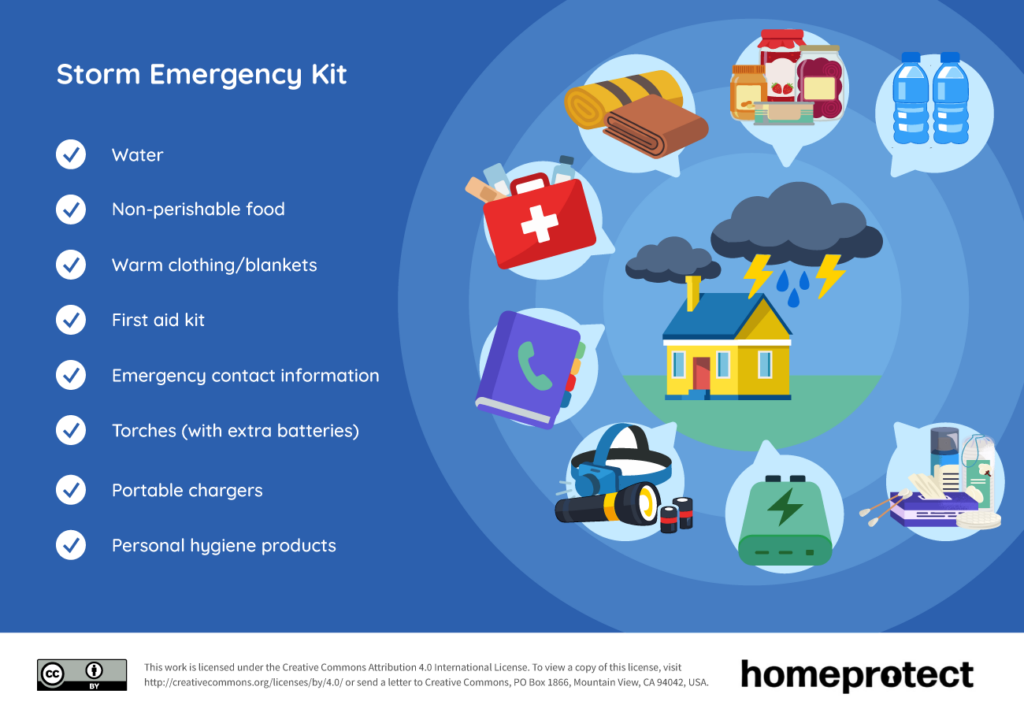
Storm emergency kit
Your home is generally the safest place to be during a storm, but even so, it’s best to prepare for emergencies, as storms can lead to power outages, loss of heating, or limited access to essential services.
Some ideas for an emergency kit include:
- Water, and non-perishable food to last for several days
- Warm clothing and blankets
- Fully stocked first aid kit
- Emergency contact information
- Torches (with extra batteries)
- Portable chargers and power packs to keep your mobile phones charged
- Personal hygiene products (e.g. toiletries, hand sanitiser, wet wipes)
Most policies repair or replace only the damaged part. Where an exact match isn’t available, the nearest reasonable equivalent is used.
Yes, gradual deterioration, defective materials, poor workmanship, rot, and lack of maintenance are common exclusions for storm claims.
If damp or mould occur as a direct result from insured storm damage and you’ve taken reasonable steps to dry out the property, related remedial work may be covered as part of your claim. Please note that long-term condensation, pre-existing damp, or mould due to poor ventilation are typically excluded.

Get a home insurance quote online
Get a quote online in less than 10 minutes*
Try our free home risk calculator
This quick and easy tool gives you a personalised risk score and practical tips to reduce risks (flooding, subsidence, accidental damage, storms, fire, escape of water, theft), which may help lower your premiums, using data from similar homes in your postcode or national averages where specific data isn’t available.
It provides general guidance only (not financially or insurance advice) and won’t directly affect your policy, premium, or any claims.